The Book of Mormon
Translator:
Joseph Smith Jr.
Faith Tradition:
Latter-day Saint
Source Edition:
1920 Edition (language and versification consistent with standard Latter-day Saint editions)
Available Formats:
Paperback (8.5 × 11)
Description:
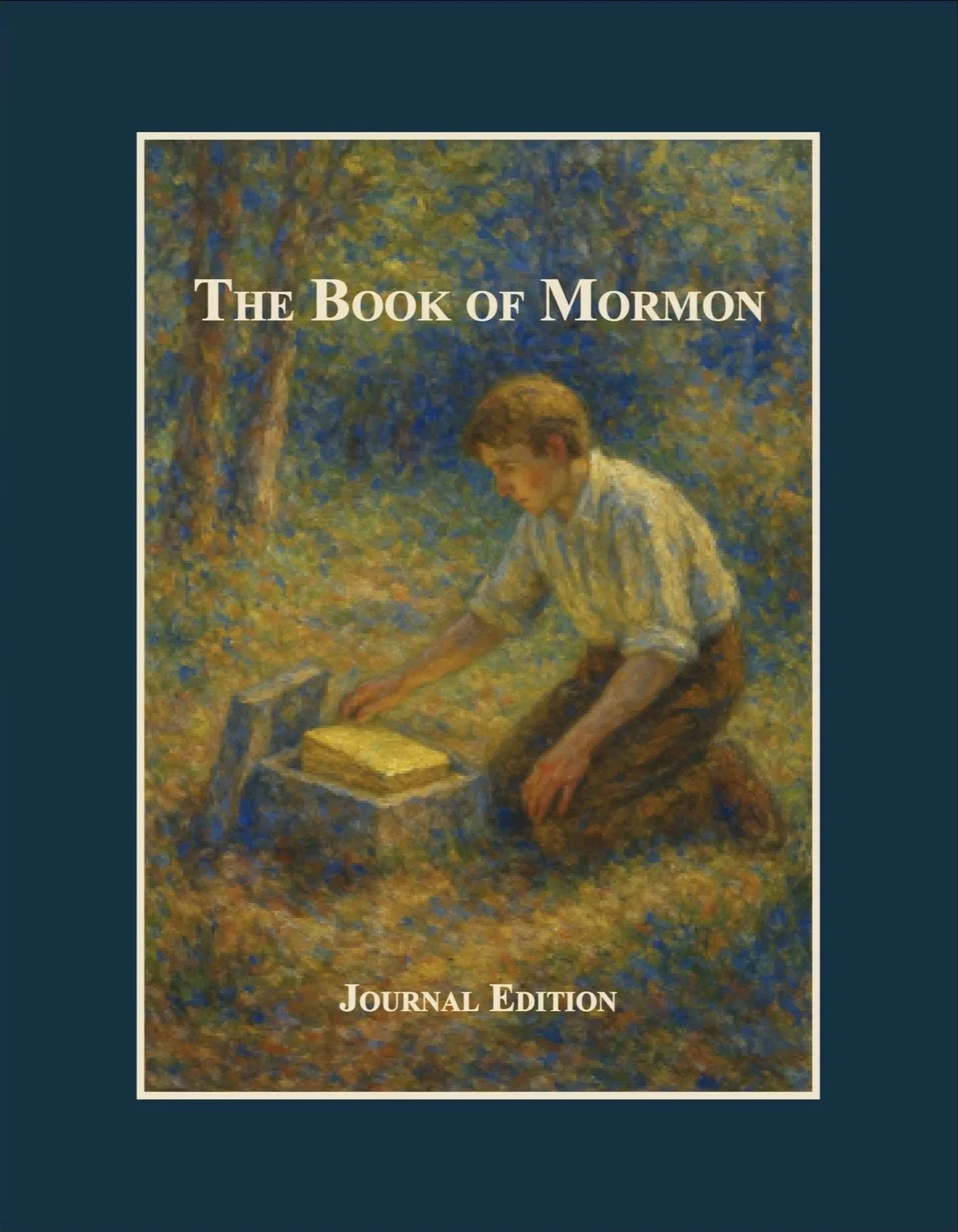
The Book of Mormon Journal Edition for Study and Reflection is designed for readers who want to engage more deeply with The Book of Mormon during their daily personal study. Rather than just skimming through your chapter a day, use this Journal Edition of The Book of Mormon as a study tool for diving deep into The Book of Mormon. It has been carefully designed to allow for thoughtful, fulfilling study.
This large-format 8.5×11 paperback includes extra-wide 3-inch outside margins and a dedicated reflections section at the back of the book, perfect for recording your testimony and insights. The wide margins allow ample room for commentary and notes in line with key verses. The pages are suitable for pencil, pen, highlighters and sticky notes. Feel free to color in and paste in additional resources. The result is a journal-style edition that can enrich your daily study. You'll be able to record your scripture notes, with enough room left over for added notes each read-through. This is the quintessential edition of The Book of Mormon for seminary & institute students, missionaries, and all members who take scripture study seriously.
Key Features:
Faithful production of the text of The Book of Mormon
Chapter and verse numbering preserved
Extra-wide 3-inch margins designed for journaling and study notes
Reflections section at the end for deeper personal writing and testimonies.
Clear, reader-friendly typesetting for extended study sessions
Includes the Testimony of the Three Witnesses and Eight Witnesses
This edition is ideal for personal scripture study, classroom use, or thoughtful gifts for those seeking to reflect on The Book of Mormon in a structured and personal way.
This is an independent publication and is not affiliated with or endorsed by The Church of Jesus Christ of Latter-day Saints. This edition utilizes the public domain text of The Book of Mormon.
Editor’s Preface
This edition of The Book of Mormon has been prepared with the intent of helping readers slow down, reflect, and record their thoughts as they study. During my own time as a missionary, I had the opportunity to teach from the Book of Mormon in multiple languages. I found that while some people could read many pages quickly, the deepest understanding often came when someone paused after just a few verses to consider, write, and apply what they had learned. My hope is that this journal edition will help you approach the text in that same spirit of reflection, focusing on comprehension rather than speed.
To support this purpose, the formatting of this edition is designed to give you space to interact directly with the words. The wide three inch outside margins allow ample room for notes, sketches, underlining, or questions. I encourage you to make this copy your own. Use the margins to record insights, mark connections, or write reflections that come to you. Feel free to use post it notes, tabs, or stickers, anything that makes the book a living tool for your personal study. At the end of the volume, a dedicated Reflections section provides additional blank pages where you can gather more extended thoughts, summaries, or patterns that you notice across your reading.
This text is based on the 1920 public domain edition of The Book of Mormon. That edition came just a few decades after the LDS Church officially ended the practice of polygamy with the Second Manifesto, and it represents a point in time when the Church was stabilizing its place in American society. Historically, it is the edition that Russell M. Nelson and many of his generation would have grown up reading. It preserves the chapter and verse structure familiar to readers today, making it easy to use alongside modern official editions.
Readers familiar with current editions may notice some differences in editorial choices. This reflects the gradual editorial refinement that shaped the text. In the earliest decades following its first publication in 1830, The Book of Mormon saw significant instability in formatting, punctuation, and phrasing as different editions introduced corrections and adjustments. By contrast, from the 1920 edition onward the core text has been relatively stable, with only limited changes over the past century.
The history of the text also explains some of these differences. The Book of Mormon was originally dictated by Joseph Smith Jr. as a continuous manuscript without punctuation or verse divisions. The first printer, working from that manuscript, added punctuation, standardized spelling, and divided the text into sentences and paragraphs. Later editors formalized the chapter and verse system we now take for granted. Because of this layered process, reading carefully, with pauses to think and write, is especially important. The formal and archaic style of the text is also best addressed through measured, deliberate study.
I have also included the testimonies of the witnesses, as found in the 1920 edition. They are an integral part of the text’s historical presentation. While this edition does not include the full narrative of the miraculous story traditionally told about the coming forth of The Book of Mormon, I felt it would be incomplete not to include the witness statements themselves. They have long been printed at the beginning of the book, and their inclusion here maintains continuity with how The Book of Mormon has been historically introduced to readers. Their presence reminds us that the text has always been framed both as a theological guide and as a history.
This journal edition is not meant to replace anyone’s existing scriptures. It is meant to provide a space where study and journaling come together. My desire is that you will find the margins and reflections section useful in digesting the text, whether you read a single verse or an entire chapter at a time. In doing so, I hope this book helps you slow down, consider carefully, and record insights that may otherwise be lost.
—Ken Simes