The Great Gatsby
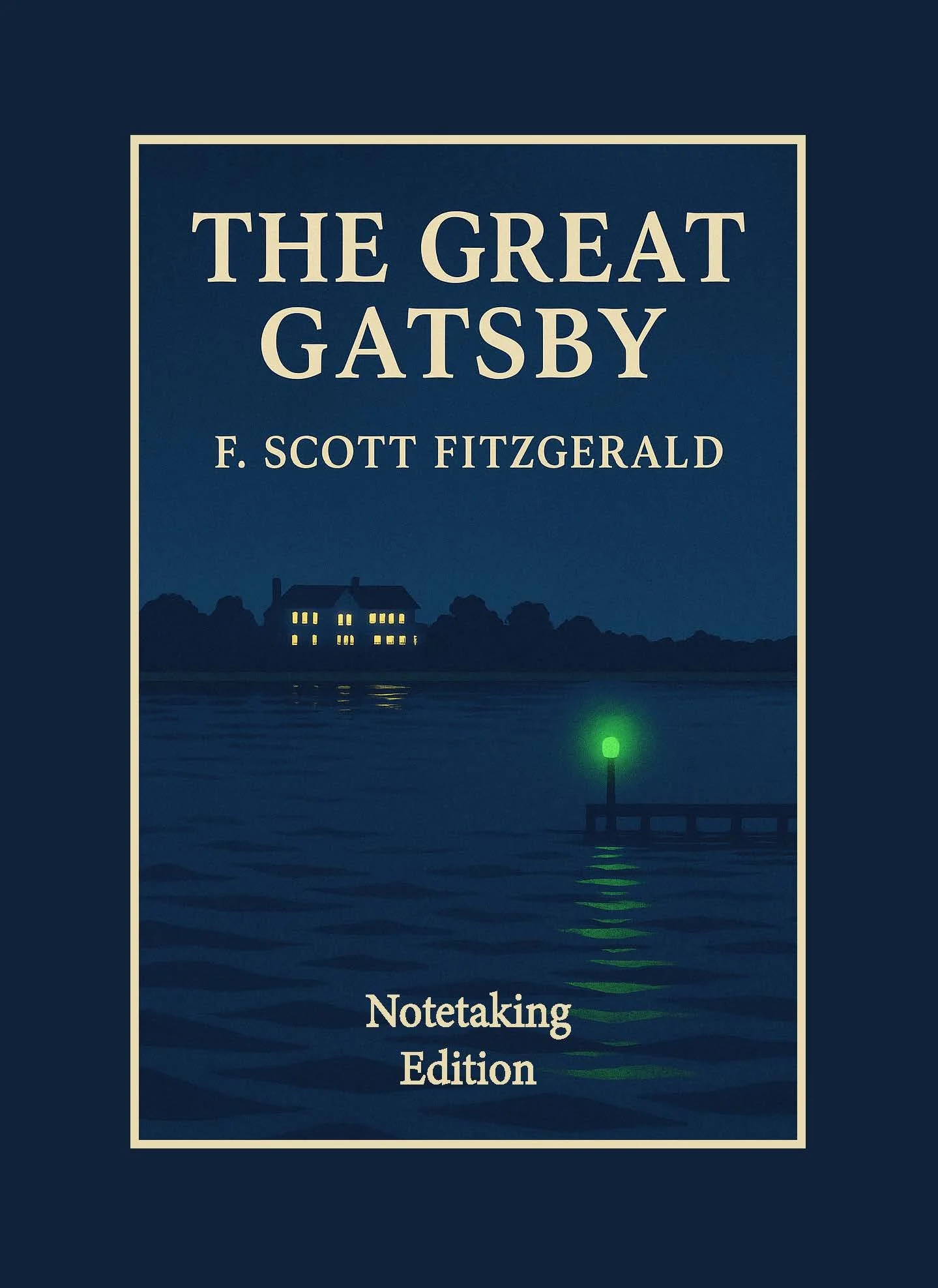
Author:
F. Scott Fitzgerald
Source Edition:
1925 Edition
Available Formats:
Paperback (8.5 × 11)
Description:
The Great Gatsby: Wide-Margin Study Edition
by F. Scott Fitzgerald — with Preface by The Editor
Step into the dazzling world of the Jazz Age with The Great Gatsby, F. Scott Fitzgerald’s timeless masterpiece of love, ambition, and the American Dream.
This Study Edition has been carefully formatted for readers, students, and lifelong learners who want more than just the text. It features:
Wide Margins for Note-Taking – Ample space on every page for thoughts, analysis, and study notes.
Clear, Readable Formatting – Professionally typeset in a classic, easy-to-read font at a comfortable size.
Editor’s Preface – A neutral introduction providing helpful context for this edition.
Public Domain Text – Faithfully reproduced from the original 1925 edition, now in the public domain.
Unlike ordinary printings, this edition is designed for active reading—whether in the classroom, book club, or personal study. The elegant layout and generous margins make it ideal for annotations, journaling, and deeper engagement with Fitzgerald’s prose.
The Great Gatsby endures as one of the most widely read novels of the twentieth century, a sharp and lyrical portrait of wealth, longing, and illusion in 1920s America. Now, with this Wide-Margin Study Edition, you can experience the novel in a format that invites reflection and discovery.
Perfect for:
High school and college students
Book clubs and discussion groups
Readers who love to annotate and reflect
Rediscover Fitzgerald’s masterpiece in a format built for readers who think, question, and dream.
Editor’s Preface
First published in 1925, The Great Gatsby quickly established itself as one of the most enduring works of American literature. In F. Scott Fitzgerald’s portrayal of Jay Gatsby and the world of Long Island’s roaring twenties, readers find not only a story of ambition and desire, but also a sharp reflection on the illusions that can define a life. Nearly a century later, its themes of wealth, aspiration, love, and disillusionment remain remarkably relevant.
Fitzgerald wrote in the heart of the Jazz Age, a period of economic growth, social transformation, and cultural energy. The United States had emerged from the First World War with renewed optimism, yet beneath the glitter of parties and progress lay questions about meaning, identity, and the costs of unchecked pursuit. Gatsby’s quest for Daisy Buchanan is more than a personal longing; it symbolizes the American tendency to believe in reinvention, and the dangers that come when dreams harden into obsessions.
This edition of The Great Gatsby has been created to invite active reading. The wide margins offer generous space for notes, reflections, and observations. Literature endures not just because of the words on the page, but because of the conversations that follow — the dialogue between text and reader, between a novel and the age in which it is read. With room for annotation, this volume allows each reader to carry on that conversation in a tangible way.
Teachers may find these margins useful for preparing lesson notes. Students can connect themes, trace symbols, or record interpretations alongside the text itself. Members of book clubs can capture their impressions and questions for group discussion. Individual readers may wish to write personal responses, marking passages that speak to their own experiences or challenge their perspectives. By offering more than empty space, the margins transform the book into a companion for study and reflection.
While The Great Gatsby has been printed countless times, this edition emphasizes accessibility and engagement. The large page format and clear text are paired with deliberate spacing, reducing strain on the eye and opening the text to new levels of interaction. This is not a collector’s volume designed to be shelved, but a working text meant to be lived in — written upon, returned to, and shaped by the reader’s hand.
In presenting this study edition, my hope is that readers encounter Fitzgerald’s novel not as a relic of the past, but as a living work that speaks to the present. The moral questions posed — about ambition, loyalty, the gap between wealth and meaning — remain urgent in any age. To read Gatsby’s story today is to ask what remains timeless in human aspiration, and what illusions continue to shape our societies and ourselves.
Each copy of this book will, in a sense, become unique. The notes left in the margins will mark the thoughts, questions, and insights of one reader’s journey. In this way, The Great Gatsby is renewed again and again, not only by the brilliance of Fitzgerald’s prose, but by the engagement of those who continue to wrestle with it.
It is with this purpose in mind that this edition has been prepared. May it serve students, teachers, and casual readers alike as more than a text to be read once and forgotten. May it become instead a space for reflection — a book that records not only Fitzgerald’s words, but also your own.
—Ken Simes