The Call of the Wild
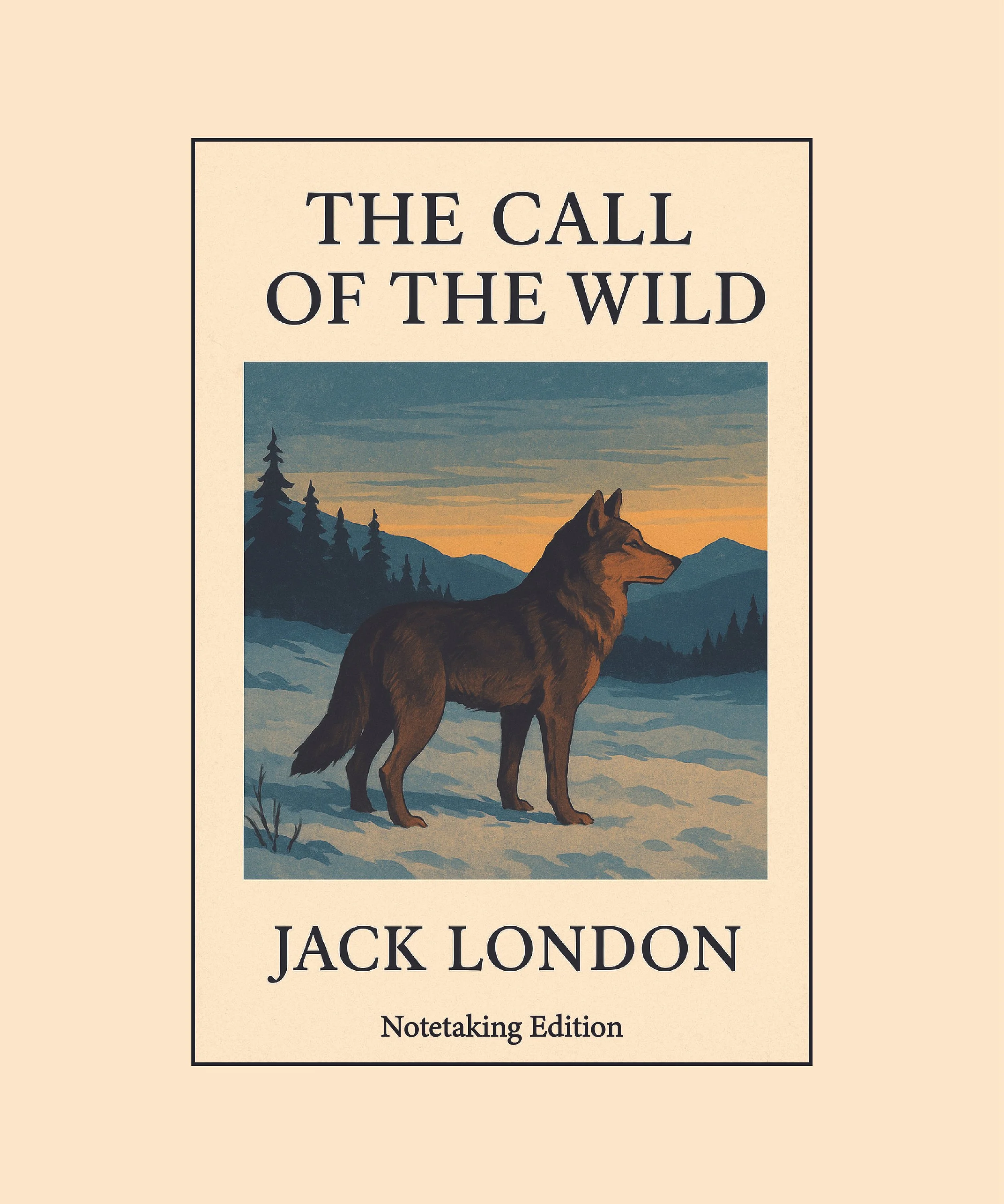
Author:
Jack London
Source Edition:
1903 Edition
Available Formats:
Paperback (8.5 × 11)
Description:
A timeless adventure in a study-friendly format.
First published in 1903, Jack London’s The Call of the Wild is the unforgettable story of Buck, a domestic dog stolen from a comfortable life and thrust into the brutal world of the Yukon. Through hardship and survival, Buck awakens to his primal instincts and discovers a deeper belonging in the wild. London’s vivid prose captures both the harsh beauty of the North and the universal struggle between civilization and instinct.
This edition has been prepared as a Wide Margins Study Edition, designed for readers who want space to engage more deeply with the text. Extra room along the page edges makes it easy to add notes, insights, and reflections—transforming this classic into both a reading experience and a personal study companion.
Features of this edition:
Complete, unabridged text of Jack London’s The Call of the Wild (1903 Macmillan first edition source)
Wide margins for annotation and study notes
Clean, modern typesetting for comfortable reading
A new Editor’s Preface introducing the novel and its enduring themes
Whether you are reading London’s tale for the first time or returning to it with fresh eyes, this edition offers both fidelity to the original and the freedom to make it your own.
Perfect for classrooms, book clubs, and personal study, this edition brings one of the greatest adventure novels in American literature into a format made for today’s readers.
Editor’s Preface
When Jack London published The Call of the Wild in 1903, he was a young writer whose work drew deeply on his experiences in the Klondike Gold Rush. The novel quickly became his breakout success, capturing not only the harsh realities of life in the North but also the primal forces that shape both animals and people. More than a century later, it remains one of the defining works of American literature, a story that bridges naturalism, adventure, and allegory.
At its heart is the journey of Buck, a domesticated dog uprooted from comfort and thrust into the brutal world of the Yukon trail. London portrays Buck’s transformation with unflinching clarity, showing how instinct, survival, and leadership emerge under pressure. The novel speaks to broader questions about civilization and wilderness, culture and instinct, and the enduring tension between progress and the call of something older and more essential.
I have prepared this edition for learners who wish to engage with the text in a way that encourages reflection. Wide margins provide space for notes and observations, allowing the book to serve not just as a story but also as a personal study tool. Readers may find themselves tracing themes of power, adaptation, and belonging, or simply pausing to consider the beauty of London’s descriptions of snow, ice, and northern skies.
The Call of the Wild speaks deeply to readers still, despite the advancing years since its first publication, through the story of Buck. I’ve always loved stories through the lens of personified animals. The ease with which such stories draw me in emotionally has always astounded me. I’ve learned through the years to appreciate the insights this perspective can give, and I relish those revelations. I expect the reader will enjoy a similar experience that will stay with them.
The text presented here is based on the original 1903 publication by Macmillan. I’ve taken care to preserve London’s language faithfully while formatting it for modern readability. Some minor adjustments in spacing and layout have been made for that end.
In designing this edition, I have tried to strike a balance between preserving the comfortable formatting of a standard novel against adding clarity and useful space. My intent is that within this edition the reader will be able to remain immersed in the story, while having ample room to take notes and jot insights across several subsequent readings. I urge you to use this edition to its full potential.
The Call of the Wild is both a survival tale and a meditation on transformation. By the final chapter, Buck has not only endured hardship but discovered a deeper belonging in the wilderness. The story continues to remind us that strength and resilience are born in adversity and that sometimes the truest path is the one that calls us back to our origins.
It is my hope that this edition will help readers foster insights and a deeper appreciation for this classic work. It is a tool for the dedicated learner.
—Ken Simes