The House of the Lord
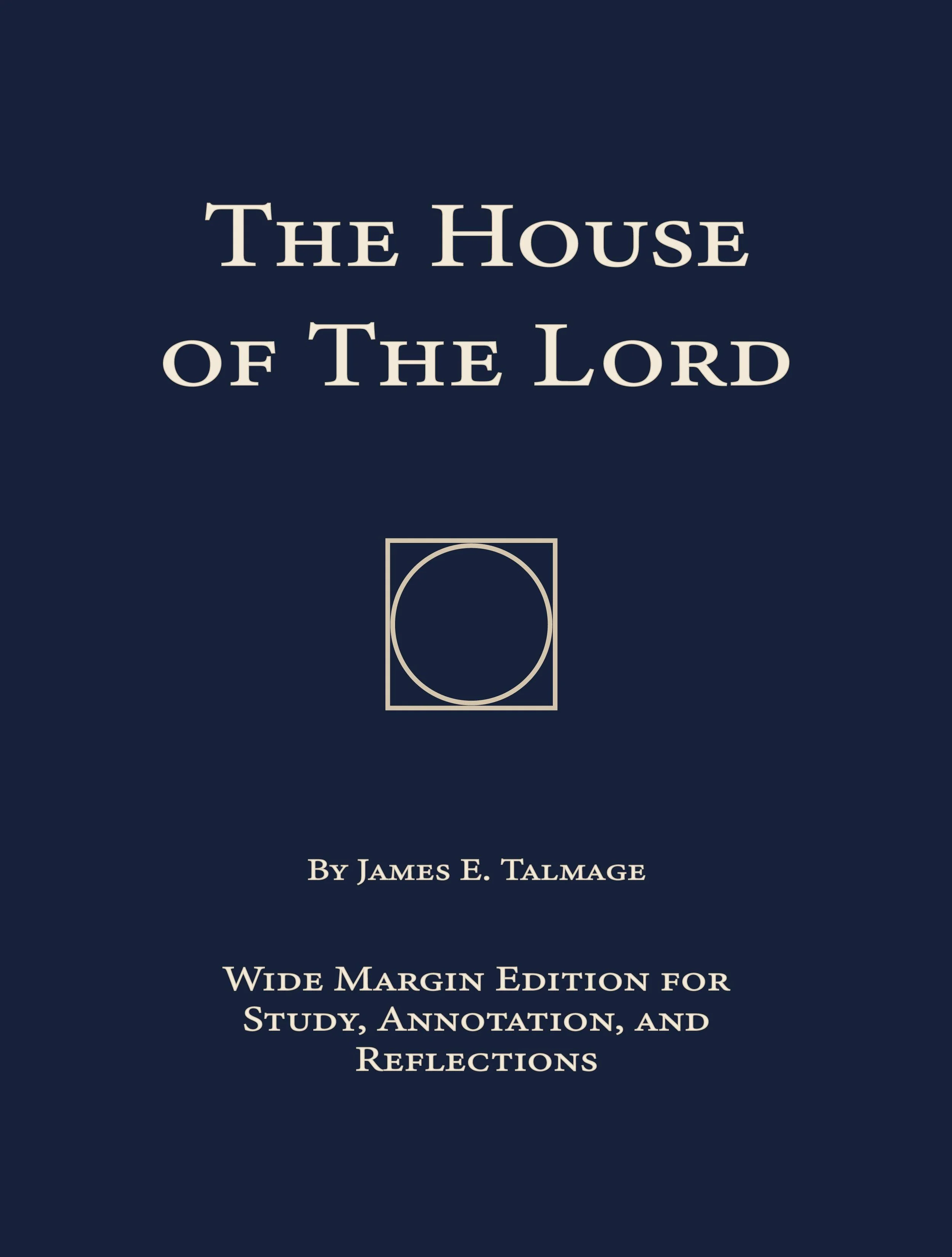
Author:
James E. Talmage
Faith Tradition:
Latter-day Saint
Source Edition:
1912 Edition
Available Formats:
Paperback (8.5 × 11)
Description:
A foundational explanation of Latter-day Saint temples, presented in a clean, study-focused edition.
First published in 1912, The House of the Lord is James E. Talmage’s systematic treatment of temples within Latter-day Saint theology. Written during a period of public scrutiny and institutional development, the book seeks to explain the purpose, history, and doctrinal meaning of temples by situating modern practice within a broader biblical and historical context.
Talmage writes as a theologian and educator rather than a devotional author. Drawing on scripture and ancient temple traditions, he traces the concept of sacred space from the Old Testament through early Christianity and into the modern Church. The result is a structured, explanatory work that reflects both the intellectual character of its author and the theological priorities of early twentieth-century Mormonism.
This edition is designed for careful reading and study. The complete public-domain text is reproduced with modern layout and typesetting for readability. Wide margins are included throughout for annotation, reflection, and comparative analysis. Original footnotes are preserved, and original page numbers are indicated for reference.
Certain photographic plates included in the original edition were published with separate copyright reservations and are omitted from this edition as a matter of editorial discretion. The omission does not affect the text.
Whether read as theology, history, or primary source material, The House of the Lord remains an essential work for understanding how temple worship was articulated and defended during a formative period of Latter-day Saint development.
This edition includes
Complete public-domain text (1912)
Modern formatting for comfortable reading
Wide margins for notes and study
Preserved footnotes and original page references
Clean, minimalist design for long-term use
Disclaimer: This edition is an independent publication and is not affiliated with, endorsed by, or sponsored by The Church of Jesus Christ of Latter-day Saints.
Editor’s Preface
The House of the Lord, by James E. Talmage occupies a distinctive place within Latter-day Saint theological and institutional literature. First published in the early twentieth century, the work addresses a subject that stood at the center of Latter-day Saint religious life but remained largely unfamiliar to the outside world. At a time when temples were both symbolically central and practically inaccessible to most nonmembers, Talmage sought to provide a systematic explanation of their purpose, history, and theological significance. The book emerged during a period when the Church was navigating increased public scrutiny and attempting to articulate its beliefs with greater clarity and confidence.
Talmage was well suited to this undertaking. As a scientist, educator, and Church leader, he approached religious subjects with an emphasis on structure, classification, and orderly exposition. In The House of the Lord, he applies this method to the concept of sacred space, tracing temples through biblical history, early Christian practice, and Latter-day Saint restoration theology. Rather than presenting personal testimony or devotional reflection, Talmage constructs a descriptive and explanatory account, grounding his claims in scripture, historical precedent, and institutional authority.
The book reflects both the priorities of its author and the concerns of its moment. Talmage wrote at a time when the Church was expanding its temple-building efforts and seeking to explain those efforts to a broader audience. His discussion frequently aims to demonstrate continuity between ancient temple worship and modern Latter-day Saint practice, emphasizing order, purpose, and divine pattern. In doing so, the work functions not only as a theological explanation, but also as an assertion of legitimacy and coherence within the broader religious landscape of the period.
Readers may come to this text from a wide range of perspectives. For Latter-day Saint readers, the book has long served as an authoritative exposition of temple doctrine and meaning. For historians, former members, and readers unfamiliar with Mormonism, it provides a valuable primary source for understanding how temples were framed and defended during a formative stage of institutional development. The work assumes a degree of familiarity with scriptural narratives and theological premises, and its arguments are cumulative rather than introductory.
This edition is designed to support careful and reflective engagement with the text. Wide margins are provided throughout to allow for annotation, comparison, and critical response. Talmage’s prose is formal and methodical, and readers may benefit from pausing to consider how his explanations relate to both earlier religious traditions and later developments within the Church. Space for reflection is included at the end of the volume to encourage synthesis and independent evaluation.
It is important to recognize that The House of the Lord reflects the theological assumptions and institutional priorities of its time. Subsequent Church teachings and practices have evolved in various ways, and not all emphases found here remain central in contemporary discourse. This edition does not seek to harmonize those developments or to present the work as definitive for all readers. Instead, it preserves the text as a historical and theological document, allowing readers to encounter it on its own terms.
Whether approached as a study of sacred architecture, a theological explanation of temple worship, or a historical artifact of early twentieth-century Mormon thought, The House of the Lord offers insight into how religious traditions construct meaning around space, ritual, and authority. Engaging with this work invites reflection on the ways sacred institutions are explained, defended, and transmitted across generations.
—Ken Simes