The Imitation of Christ
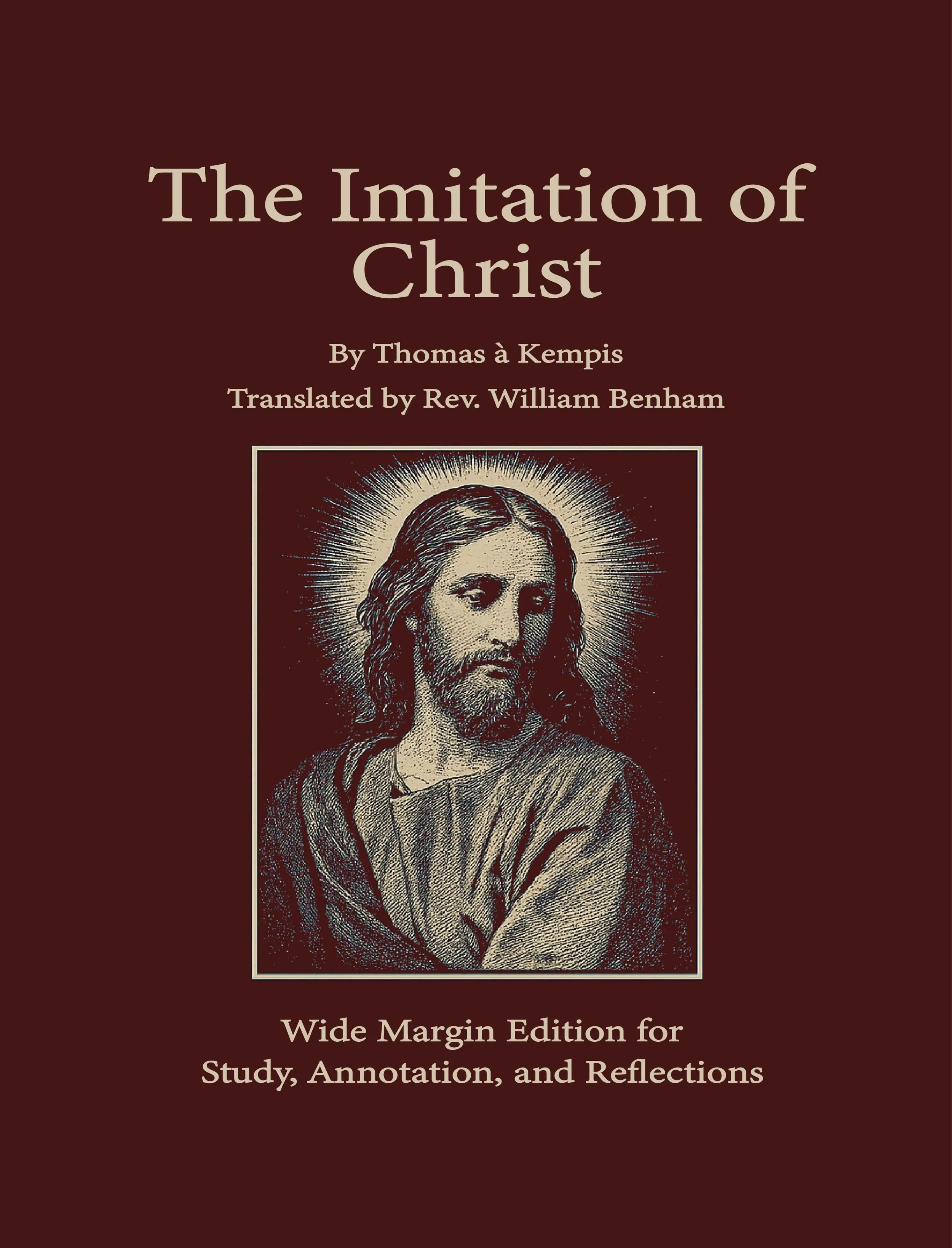
Author:
Thomas à Kempis
Faith Tradition:
Catholic (with broad Christian readership)
Source Edition:
1886 Benham Translation
Available Formats:
Paperback (8.5 × 11), Hardcover (8.25 × 11)
Description:
A Christian Classic Designed for Thoughtful Reading, Study, and Reflection
The Imitation of Christ has guided and strengthened Christian readers for centuries. This edition is designed not only to be read, but to be actively used. With generous margins and a clean, readable layout, it provides space to underline meaningful passages, record personal reflections, and engage more deeply with one of the most enduring devotional works in Christian history.
Whether you are reading it slowly as part of your personal devotional life, working through it for spiritual study, or revisiting familiar passages over time, this edition is made to support a more intentional reading experience. Instead of simply moving through the text, you can interact with it directly, keeping your notes, insights, prayers, and observations alongside the words that matter most.
This wide margin edition is especially well suited for:
Personal devotional reading
Christian study and reflection
Underlining and annotation
Journaling key insights and prayers
Meaningful gifting for thoughtful readers
Designed for readers who want more than a standard reprint, this edition offers a practical and beautiful way to work through a timeless Christian classic with greater focus and personal engagement.
Features of this edition include:
Wide margins for notes and annotation
Clean, readable formatting
A layout designed for reflection and study
A more usable format for long-term reading and revisiting
If you are looking for an edition of The Imitation of Christ that invites deeper engagement rather than passive reading, this volume is made for exactly that purpose.
Continue Your Study — This edition is part of a growing collection of wide margin classics designed for thoughtful reading, annotation, and reflection. Learn more about this and other study editions by Ken Simes at: www.KenSimes.com
Editor’s Preface
Among the great books of Christian devotion, few have endured with the quiet strength of The Imitation of Christ. First written in the early fifteenth century, this humble collection of reflections has been read by saints, scholars, and ordinary believers for more than five centuries. It is not a systematic theology or a lengthy discourse on doctrine, but rather a call to live simply, faithfully, and with the heart fixed upon Christ. Its power lies in its clarity. Each chapter, whether only a page or two in length, draws the reader back to the essential question of discipleship: will we truly imitate the life and spirit of Jesus, or will we remain content with a merely outward religion?
The text speaks with a voice at once tender and uncompromising. Thomas à Kempis reminds us that the way of Christ is not found in honor, wealth, or knowledge for its own sake, but in humility, obedience, and love. In an age when theological debates shook Europe and questions of power often overshadowed questions of character, this book offered a different emphasis: that true wisdom is not in lofty words but in a holy life. This emphasis has allowed The Imitation of Christ to transcend its time, finding new audiences wherever people long for a deeper, more personal faith.
The translation used in this edition is that of William Benham, first published in 1886 and long in the public domain. His rendering strikes a balance between fidelity to the Latin original and clarity for English readers. The style is dignified yet readable, avoiding the archaisms that make earlier translations cumbersome. While modern versions abound, Benham’s continues to serve those who seek a trustworthy and accessible text. For the purposes of this edition, Benham’s translation provides both historical continuity and a level of accessibility that makes it fitting for devotion and study today.
This edition has been designed as a journal edition, with wide margins and space at the close of the volume for reflections. The aim is not merely to reproduce the words of Thomas à Kempis, but to invite the reader into a dialogue with them. Devotional books can be read quickly, but their real fruit comes through meditation, self-examination, and prayerful application. The ample margin space is intended to slow the reader down, to encourage notes, questions, prayers, and personal resolutions written beside the text. In this way, the book becomes not only a record of Thomas’s reflections, but also a record of the reader’s own spiritual journey.
The structure of The Imitation of Christ is simple: four Books, each divided into short chapters. Book I deals with general admonitions about the spiritual life, urging the believer to forsake vanity and fix the mind on Christ. Book II turns inward, focusing on the cultivation of the soul and the pursuit of inner peace. Book III, the longest, centers on the inner dialogue between the disciple and Christ, offering consolation and encouragement amid trials. Book IV addresses the Sacrament of the Eucharist, reflecting the central role it played in Thomas’s devotion. Together, these four parts cover the whole movement of the Christian life: renouncing the world, seeking inner transformation, conversing with Christ, and partaking of His life in the Sacrament.
It is striking that so much of the book is given to short, almost aphoristic lessons. One can easily read an entire chapter in a minute, yet the words are meant to linger far longer. This brevity is part of the genius of the work. In contrast to long sermons or elaborate theological arguments, The Imitation of Christ presents truths that can be quickly grasped yet require a lifetime to master. The journal format of this edition is intended to honor that dynamic: read slowly, reflect deeply, and return often.
No devotional classic is without its challenges. Some modern readers may find Thomas’s words severe, particularly in his warnings against worldliness and pride. Yet beneath the severity is a genuine tenderness for the soul’s welfare. The point is not to strip joy from life, but to direct joy toward its proper source. The harshest admonitions are always paired with reminders of Christ’s grace, patience, and love. If read with humility, the book can awaken both compunction and hope.
This journal edition does not add commentary or reinterpret Thomas’s work. Instead, it provides the space for each reader to supply his or her own commentary. What stands out to you may not stand out to another. What convicts you today may comfort you tomorrow. The practice of writing beside the text ensures that the book becomes a living companion, growing richer with each return.
It is my hope that this edition will serve those who wish not merely to admire the example of Christ, but to follow Him. In a time when distractions multiply and faith is often treated as a matter of convenience, The Imitation of Christ remains a voice calling us back to the essentials: humility, obedience, charity, and union with God. May these pages, and the notes you inscribe within them, help you to walk more closely with the One who first said, “He that followeth Me shall not walk in darkness, but shall have the light of life.”
—Ken Simes