The Richest Man in Babylon
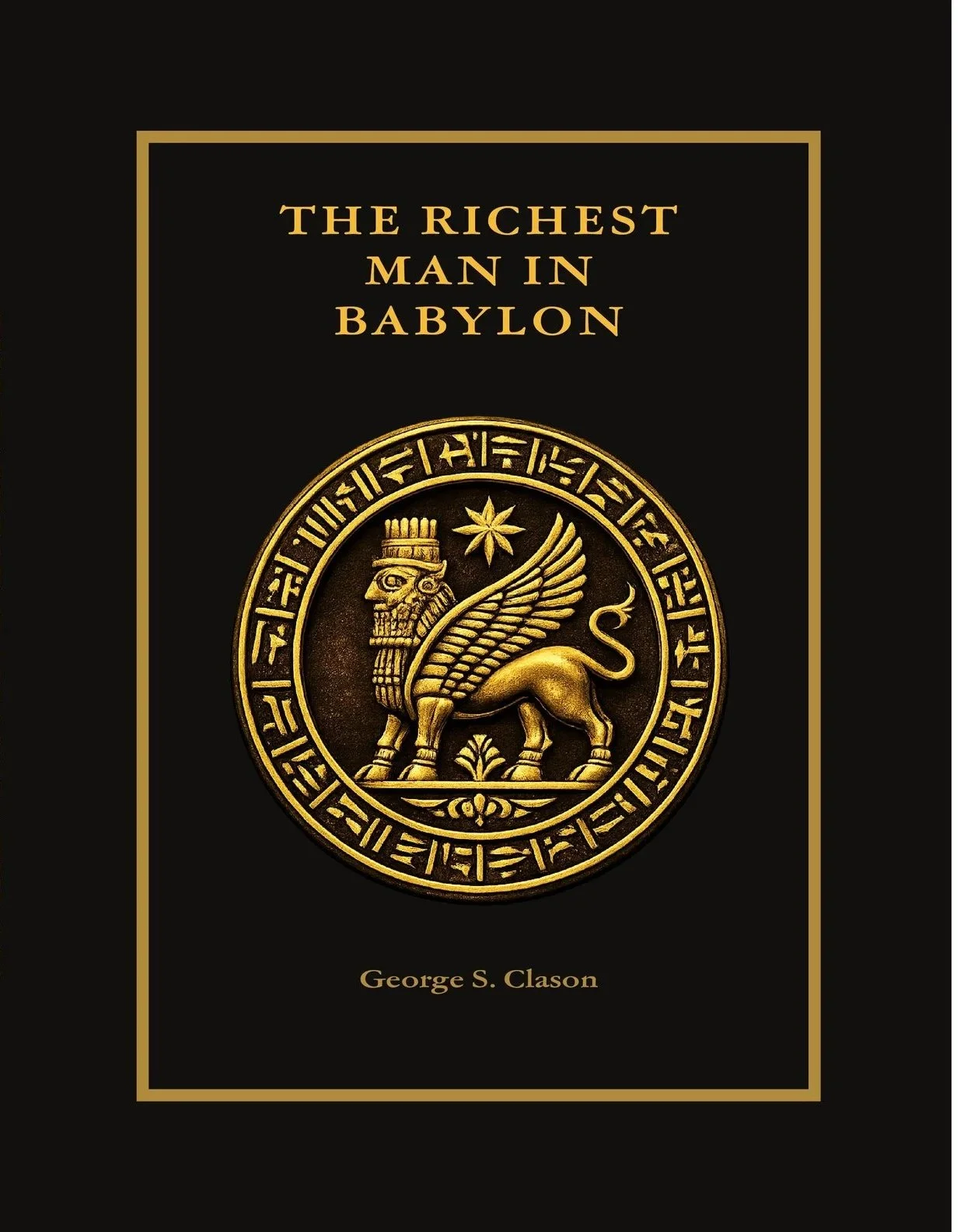
Author:
George S. Clason
Source Edition:
1926 Edition
Available Formats:
Paperback (8.5 × 11)
Description:
The Richest Man in Babylon – Wide-Margin Study Edition
Transform how you think about money one timeless lesson at a time.
For nearly a century, The Richest Man in Babylon by George S. Clason has guided millions toward financial independence. Its powerful parables reveal the fundamentals of wealth building: save first, invest wisely, and make your money work for you.
This exclusive wide-margin edition is designed for study, journaling, and personal reflection. It invites you to slow down and internalize the wisdom on each page while adding your own insights, goals, and plans for prosperity.
Learn how to:
Build lasting wealth through discipline and consistency
Escape the trap of debt and start paying yourself first
Protect and grow your savings with smart investments
Develop habits that lead to financial confidence and freedom
Perfect for readers of Think and Grow Rich, Atomic Habits, and The Millionaire Next Door—this book belongs in every personal library on success and self-improvement.
If you’re ready to take control of your finances and learn the time-tested laws of wealth, this edition will be your daily companion on the journey to prosperity.
Editor’s Preface
Few books on personal finance have aged as gracefully as The Richest Man in Babylon. First published in 1926, this collection of parables by George S. Clason remains one of the clearest guides to thrift and discipline. While most financial manuals fade with changing markets, this one endures because it teaches not formulas but character.
Through vivid tales set in ancient Babylon, the world’s first great trading hub, Clason presents lessons on prudence, foresight, and integrity. His stories are simple yet penetrating: save a portion of all you earn, control your spending, invest with care, seek wise counsel, and protect your wealth. They address the same struggles we face today—debt, impatience, and the lure of easy gain—and remind us that enduring prosperity begins with self-mastery.
This edition is designed for study and reflection. Wide margins invite the reader to annotate, set goals, and apply each lesson personally. Used as a journal, the book becomes both a record of Clason’s wisdom and of one’s own growth in understanding money, work, and responsibility.
Financial literacy is not a luxury; it is a foundation of freedom. Money, rightly viewed, is the fruit of discipline and foresight, not greed. The reader who takes these pages seriously will find they lead as much to stability of mind as to abundance of means.
Clason wrote from experience, not theory. Born in 1874, he witnessed America’s booms and crashes firsthand and learned that prosperity without principle is fragile. His parables, first issued as pamphlets for banks, distilled his belief that honest work, prudence, and generosity form the truest wealth.
Babylon, renowned for enterprise and invention, serves as more than a backdrop; it is a mirror of every age that grapples with ambition and debt. The imagery of camels and coins may be ancient, but the human lessons are immediate.
Historical Context
Some stories include references to slavery, the subservient status of women, and other features of ancient life that may jar modern sensibilities. These details reflect the historical setting, not Clason’s endorsement.
It must be stated plainly: slavery and the subjugation of women are morally wrong. They violate the dignity and equality owed to every person. Their presence in the parables serves only as context for moral teaching, not approval.
Would Clason have agreed with this judgment? Although he wrote within early-twentieth-century conventions, his values point strongly in that direction. His parables praise diligence, fairness, and compassion, and they reject cruelty and exploitation. When bondage appears, it is overcome through wisdom and effort. The limited role of women mirrors historical custom rather than moral choice. If Clason wrote today, his principles of fairness and independence would naturally extend to all people alike.
Readers should approach these passages with discernment, recognizing their time-bound language while focusing on the universal message. Clason’s larger theme is liberation: ignorance, debt, and waste are the true chains that bind us. Financial understanding is therefore a moral act of freedom.
Enduring Lessons
The strength of The Richest Man in Babylon lies in its brevity. Each parable captures a familiar weakness—overspending, misplaced trust, or haste—and resolves it with enduring sense. Its wisdom is clear enough for anyone to grasp yet deep enough to reward a lifetime of practice.
The virtues it teaches—patience, consistency, restraint—are the same virtues that build integrity in every sphere. One who saves learns foresight; one who invests wisely learns judgment; one who spends carefully learns control. In cultivating financial order, we also cultivate moral order.
This study edition encourages deliberate reading. After each parable, pause to ask: What does this reveal about my own habits? Such reflection turns reading into learning and knowledge into action.
Nearly a century after publication, the lessons remain urgent. Though our economy is digital and fast, the same temptations persist. The virtues that once built Babylon—discipline, prudence, and respect for honest labor—remain the pillars of any lasting prosperity.
A Living Text
This edition preserves Clason’s original words without modernization, offering space for readers to engage directly with them. Wisdom is not absorbed passively; it must be pondered and practiced.
May these parables move you from curiosity to conviction, from reading to doing. Let them remind you that wealth is not a measure of worth but a tool for stewardship and independence.
True riches lie not merely in possession but in understanding. The greatest fortune belongs to those who master their habits and direct their lives with purpose. May this book help you pursue that mastery and a prosperity that endures.
—Ken Simes